

Blog
How to Choose the Right Crochet Thread Size for Your Project
Feb
Knowing what crochet thread sizes mean is helpful. Knowing how to choose crochet thread size for a specific project is what actually makes a difference.
Many people understand that thread sizing runs in reverse — higher numbers mean thinner thread. But when it’s time to stand in front of a shelf or scroll through an online collection and decide what to buy, that knowledge suddenly feels abstract.
If you’re trying to choose crochet thread size for a doily, a garment, or a decorative table piece, the decision becomes much clearer once you stop focusing on numbers and start focusing on outcomes.
If you need a refresher on how thread numbering works, you can read the full explanation here:
👉 Understanding crochet thread numbers and thickness
https://lynscraftsyarns.com/what-are-the-sizes-of-crochet-thread/
This article goes further. It helps you decide which size to use and why.
Think About the Finished Texture First
Before you choose crochet thread size, imagine holding the finished project in your hands.
Does it feel structured and sturdy?
Does it drape softly?
Does it look delicate and intricate?
Thread thickness changes everything — the weight, the stitch definition, the durability, and even how long the project takes to complete.
When you choose crochet thread size intentionally, you’re shaping the personality of the piece.
Choosing Thread Size for Doilies and Lace Projects
Doilies are often the first place where sizing matters.
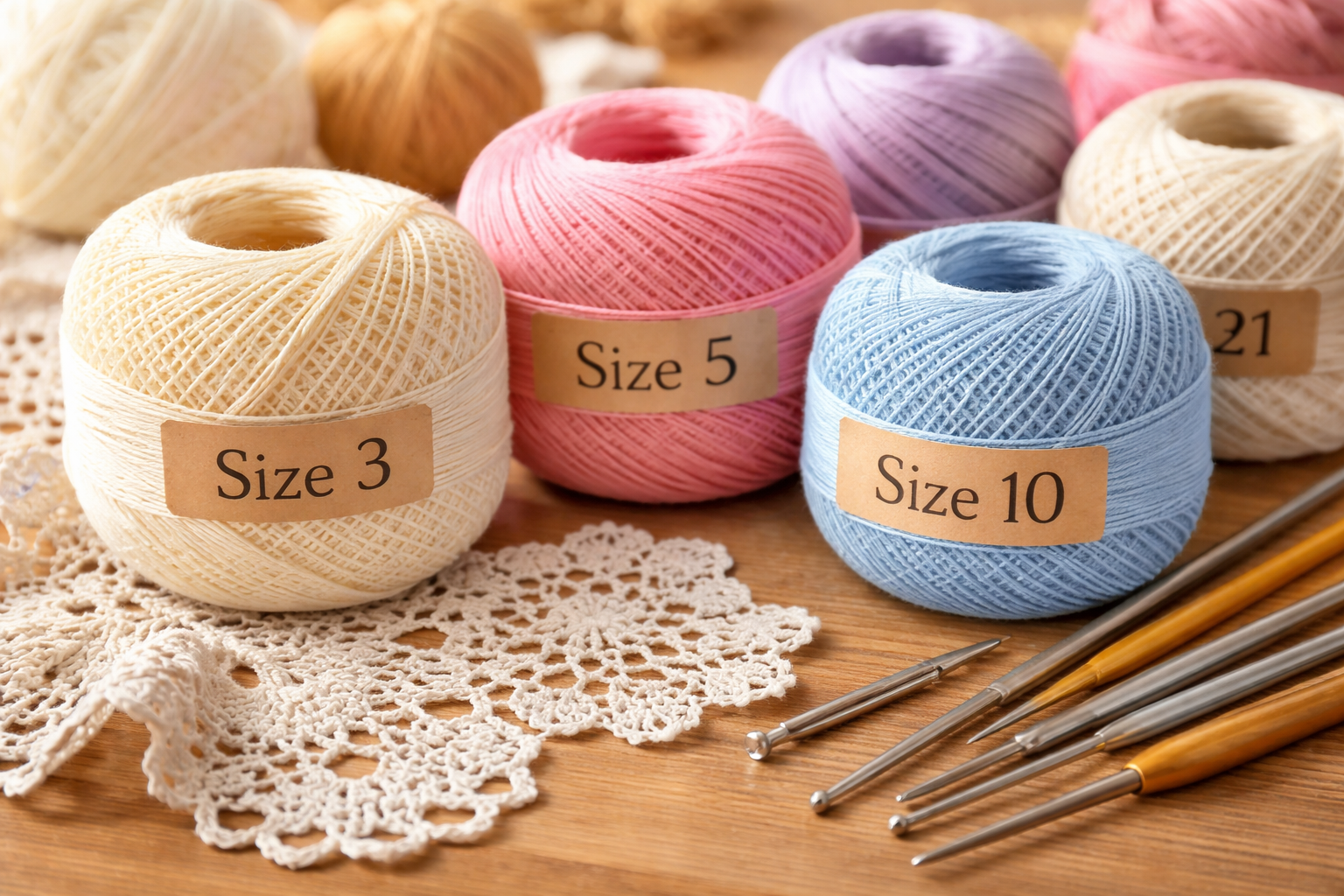
If you’re deciding how to choose crochet thread size for lace designs, size 10 is usually the most versatile starting point. It creates crisp stitch definition without becoming too delicate to manage. Many classic lace patterns — including those found in the pattern library at Lyn’s Crafts — are designed around this thickness.
👉 Browse lace and decorative patterns
https://lynscraftsyarns.com/product-category/pattern-library/free-patterns/
If you want the lace to look especially refined and heirloom-quality, you might choose crochet thread size 20 instead. The stitches become smaller and more intricate. The tradeoff is time and precision — finer thread requires smaller hooks and tighter control.
On the other hand, if you prefer a doily that works up more quickly and has slightly more presence on the table, you may choose crochet thread size 5. The stitches appear bolder and the finished piece feels sturdier.
When working with decorative lace, the decision often comes down to scale. Thinner thread produces fine detail. Thicker thread produces visible texture.
Choosing Thread Size for Clothing and Wearables
Garments introduce a different set of considerations.
When you choose crochet thread size for clothing, drape becomes more important than structure. You want the fabric to move naturally and feel comfortable against the skin.
Size 3 thread behaves almost like a lightweight yarn. It creates a breathable fabric suitable for shawls, wraps, and summer tops. If you are comparing different crochet thread sizes for garments, size 3 and size 5 are often the most practical.
Size 10 can also work for clothing, but it creates a lighter, more open fabric. Very fine thread, such as size 20, may be too delicate for frequently worn pieces.
If you’re exploring project ideas for thread-based garments, you can find inspiration and educational posts in the Lyn’s Crafts blog section:
👉 https://lynscraftsyarns.com/blog/
Choosing the right thickness for wearables is about imagining how the fabric will hang when worn. If it feels too stiff or too fragile in your mind, adjust the size accordingly.
Choosing Thread Size for Tatting and Fine Detail Work
Tatting typically leans toward finer thread.
If you’re unsure how to choose crochet thread size for tatting projects, size 10 is often manageable while still producing elegant results. Size 20 creates extremely refined lace and is frequently used for intricate edging.
If you’re unfamiliar with tatting itself, this overview explains the basics:
👉 What tatting is and how it differs from crochet
https://lynscraftsyarns.com/what-is-tatting/
The finer the thread, the more control required. When you choose crochet thread size for detailed lace, patience and hook size both matter.
Choosing Thread Size for Table Runners and Home Décor
Home décor projects such as placemats and runners benefit from durability.
If you choose crochet thread size 3 or 5 for table décor, the finished piece will have more weight and structure. It will lay flat with stability and withstand handling.
If you choose crochet thread size 10, the piece will look more decorative and intricate. It may be better suited for display than everyday use.
You can compare available options in the crochet thread collection here:
👉 https://lynscraftsyarns.com/product-category/crochet-thread/
When selecting thread for décor, ask yourself whether the item will be functional or ornamental. That answer often determines the appropriate thickness.
How Thread Size Affects Scale
One of the most important concepts to understand when you choose crochet thread size is scale.
Changing thread size does not change the stitch count in a pattern. It changes the physical size of the finished piece.
If you substitute size 5 for size 10, the finished item becomes larger. If you substitute size 20 for size 10, it becomes smaller and more delicate.
This principle is similar to how yarn weights affect gauge, a topic explained by the Craft Yarn Council here:
👉 https://www.craftyarncouncil.com/standards/yarn-weight-system
Although thread sizing follows a different numbering system, the relationship between thickness and scale works the same way.
Understanding this makes it easier to experiment confidently.
Fiber Finish Also Matters
Most crochet thread sizes are available in mercerized cotton. Mercerization strengthens cotton fibers and adds a subtle sheen, a process described in textile references such as Britannica’s cotton overview:
👉 https://www.britannica.com/topic/cotton-fiber
When you choose crochet thread size, also consider whether the fiber finish supports your goal. Mercerized cotton enhances stitch clarity and holds its shape well after blocking.
If you’re comparing cotton thread options for crochet, looking at both size and finish will help you make a more informed choice.
Comfort and Practicality
Another factor that influences how you choose crochet thread size is comfort.
Very fine thread requires smaller hooks and tighter tension control. Some people enjoy that precision. Others find it tiring over long sessions.
Thicker thread is easier to see and handle. It often feels more forgiving.
When deciding between different crochet thread thicknesses, consider how long you plan to work and what feels manageable in your hands.
A Simple Way to Decide
If you feel stuck, try this approach.
Picture the finished piece. Does it need to feel substantial or delicate? Does it need to hold weight or float lightly? Will it be used often or displayed occasionally?
If you want versatility, size 10 remains a reliable choice. If you want faster progress and bold texture, choose thicker. If you want heirloom lace, choose finer.
Once you understand how thickness affects structure, choosing becomes intuitive.
Final Thoughts
Learning how to choose crochet thread size is not about memorizing numbers. It’s about understanding how thickness affects texture, scale, and durability.
When you can visualize the finished project and connect that image to thread thickness, the decision becomes straightforward.
And once you’re comfortable choosing the right thread for each type of project, everything else — patterns, hooks, and fiber finishes — falls into place more naturally.

