

Blog
Crochet Doily Patterns: How to Choose the Right Style and Thread
Feb
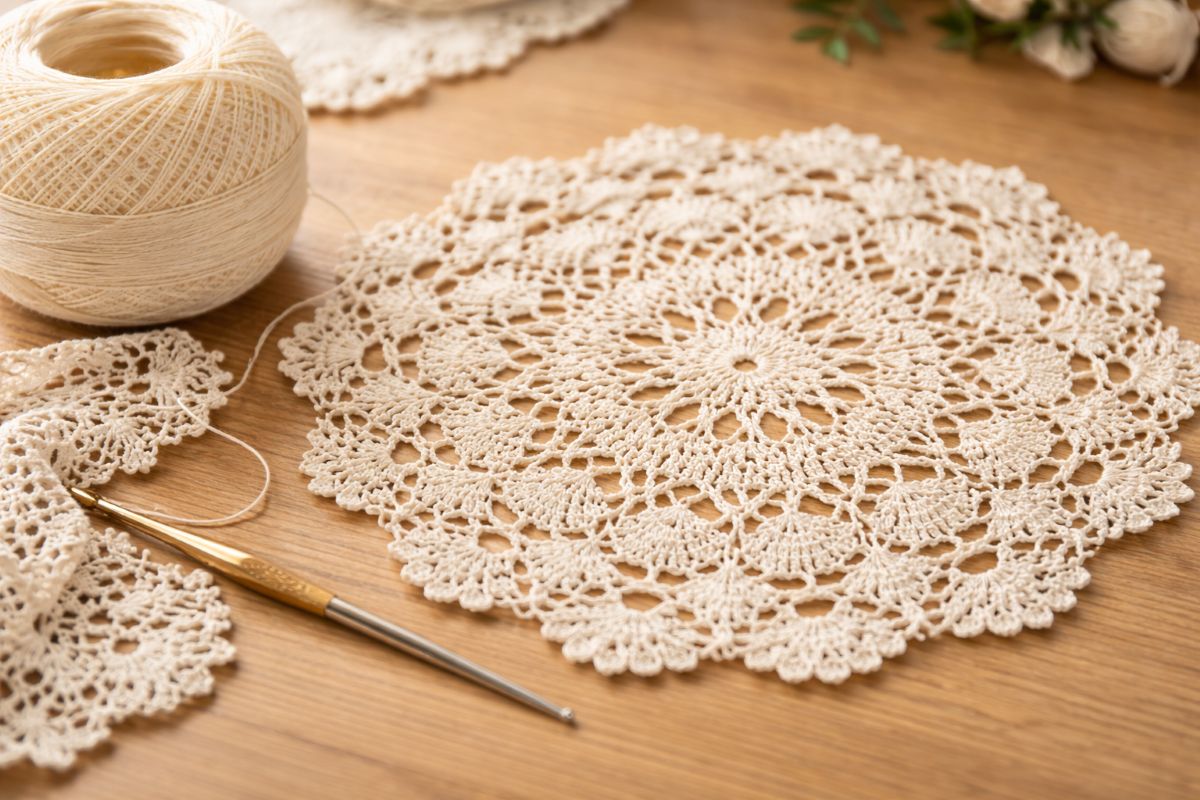
Crochet doily patterns have been part of thread crochet for generations. They appear in vintage pattern books, heirloom collections, and modern design blogs alike. Even now, when crochet trends shift toward garments and accessories, crochet doily patterns remain one of the clearest showcases of what thread crochet can do.
What makes them enduring is not just tradition. It’s the balance between structure and delicacy. A doily is small enough to finish in a reasonable amount of time, yet detailed enough to demonstrate real craftsmanship.
If you are exploring crochet doily patterns for the first time, or returning to them after working on other projects, it helps to understand how style, thread size, and structure work together.
Why Crochet Doily Patterns Remain Popular
At their core, crochet doily patterns are studies in lace construction. They build outward from a center point, often in rounds, gradually expanding through stitch increases and decorative motifs.
The repetition can be calming. The visual symmetry can be striking. And the finished piece has a presence that feels both decorative and precise.
Many lace traditions across cultures use circular patterns as their foundation. Crochet doily patterns carry that same sense of rhythm. Even contemporary interpretations often follow the same structural logic.
If you browse the Lyn’s Crafts pattern collection, you’ll notice that thread-based designs frequently return to circular lace structures because they showcase stitch clarity beautifully:
👉 https://lynscraftsyarns.com/product-category/pattern-library/free-patterns/
Understanding the Structure Behind Crochet Doily Patterns
Before choosing among different crochet doily patterns, it helps to understand how they are built.
Most begin with a small center ring. From there, each round expands the diameter. The designer controls the expansion by increasing stitches at consistent intervals. This is what allows the piece to remain flat rather than forming a bowl shape.
If you’re unfamiliar with thread thickness and how it affects lace scale, reviewing how crochet thread sizes work can be helpful before selecting a pattern:
👉 https://lynscraftsyarns.com/what-are-the-sizes-of-crochet-thread/
Thread thickness directly impacts the look of crochet doily patterns. The same stitch design made in size 5 thread will look bold and structured. In size 20, it will appear refined and delicate.
Classic Crochet Doily Patterns
Traditional crochet doily patterns often include motifs like pineapples, shells, fans, and floral radiating shapes. These designs became popular because they are both decorative and mathematically balanced.
Pineapple lace, in particular, remains one of the most recognizable elements in crochet doily patterns. The elongated stitch clusters create movement without distorting the circular form.
These classic patterns tend to work well in size 10 thread. That thickness allows the lace detail to remain visible without becoming too fragile.
If you are selecting thread for a traditional lace design, you can explore available thread options here:
👉 https://lynscraftsyarns.com/product-category/crochet-thread/
Modern Interpretations of Crochet Doily Patterns
Not all crochet doily patterns look antique. Many modern designers reinterpret the circular lace concept using bold color changes, geometric stitch combinations, or mandala-inspired layouts.
Some contemporary crochet doily patterns use variegated thread to highlight the transitions between rounds. Others simplify the lacework, focusing on negative space and symmetry rather than intricate stitch layering.
If you are comparing decorative styles, you may also find it helpful to read about gradient vs. variegated thread differences, since color variation affects how lace appears:
👉 https://lynscraftsyarns.com/gradient-vs-variegated/
Modern crochet doily patterns often feel less formal and more adaptable to everyday décor.
Choosing Thread for Crochet Doily Patterns
Selecting the correct thread is just as important as choosing the pattern itself.
Size 10 thread is the most common choice for crochet doily patterns. It provides clarity in stitch definition and responds well to blocking. The lace feels refined but manageable.
Size 20 produces a much finer texture. Crochet doily patterns worked in size 20 appear almost weightless. They require smaller hooks and more patience, but the finished piece carries heirloom quality.
If you prefer a sturdier finished piece, size 5 can be used. The lace will appear more pronounced and less intricate.
When deciding which thickness to use, consider how the doily will be displayed. Decorative centerpieces benefit from finer thread. Functional pieces, such as table accents that may be handled more often, can tolerate thicker thread.
The Role of Blocking in Crochet Doily Patterns
Blocking is essential for achieving the flat, symmetrical look most crochet doily patterns require.
After completing the stitching, the piece is gently dampened and pinned into shape. As it dries, the fibers set, enhancing stitch clarity and flattening uneven tension.
Blocking is common across lace crafts, including knitting and tatting. The concept is explained in many textile guides and fiber references, such as the Craft Yarn Council’s general guidance on finishing techniques:
👉 https://www.craftyarncouncil.com/
Without blocking, crochet doily patterns may curl at the edges or appear uneven.
How Skill Level Affects Pattern Choice
Not all crochet doily patterns are equally complex.
Beginner-friendly designs often use repeated stitch patterns with predictable increases. These allow you to focus on maintaining even tension.
More advanced crochet doily patterns introduce layered lace sections, complex stitch groupings, and tighter round spacing.
If you’re new to thread crochet, you might begin with simpler designs found in the free pattern library and gradually progress to more detailed lace structures:
👉 https://lynscraftsyarns.com/product-category/pattern-library/free-patterns/
Understanding your comfort level with thread crochet will help you select crochet doily patterns that feel achievable rather than overwhelming.
Crochet Doily Patterns and Cultural Influence
Historically, crochet doily patterns were often used to decorate furniture and household surfaces. In earlier eras, lace was a sign of craftsmanship and care.
While modern homes may not display doilies in the same way, the underlying artistry remains respected. Some contemporary crafters frame crochet doily patterns as wall art. Others incorporate them into layered textile displays.
The continued popularity of crochet doily patterns shows that even in minimalist spaces, handmade lace still carries visual impact.
Final Thoughts
Crochet doily patterns are more than decorative lace circles. They are exercises in structure, symmetry, and thread control.
Choosing the right pattern involves understanding how thread size affects scale, how stitch structure affects flatness, and how color influences visual texture.
Whether you prefer traditional pineapple lace or modern geometric interpretations, crochet doily patterns offer a practical way to explore thread crochet at any skill level.
And once you understand how thread thickness, blocking, and stitch repetition work together, selecting your next lace project becomes a more intentional and satisfying process.

