

Blog
Crochet Thread Size Substitution: What Happens If You Use the Wrong Size?
Feb
Sooner or later, almost everyone experimenting with thread crochet runs into the same situation. A pattern calls for one size of thread, but you have another. Or maybe you prefer working with a thicker thread because it’s easier to see. Or perhaps you want a more delicate result than the pattern suggests.
That’s when crochet thread size substitution becomes relevant.
Understanding crochet thread size substitution isn’t about breaking rules. It’s about understanding scale, tension, and how thread thickness changes the finished result. Once you understand what actually happens when you change sizes, the fear disappears.
If you haven’t yet reviewed how thread numbering works, you may want to read about understanding crochet thread sizes and thickness first:
👉 https://lynscraftsyarns.com/what-are-the-sizes-of-crochet-thread/
This article focuses specifically on substitution — what changes, what doesn’t, and how to make intentional adjustments.
What Crochet Thread Size Substitution Really Changes
When you perform crochet thread size substitution, you are not altering the stitch pattern itself. You are altering the physical dimensions of the finished piece.
The number of stitches remains the same. The structure of the pattern remains the same. What changes is the scale.
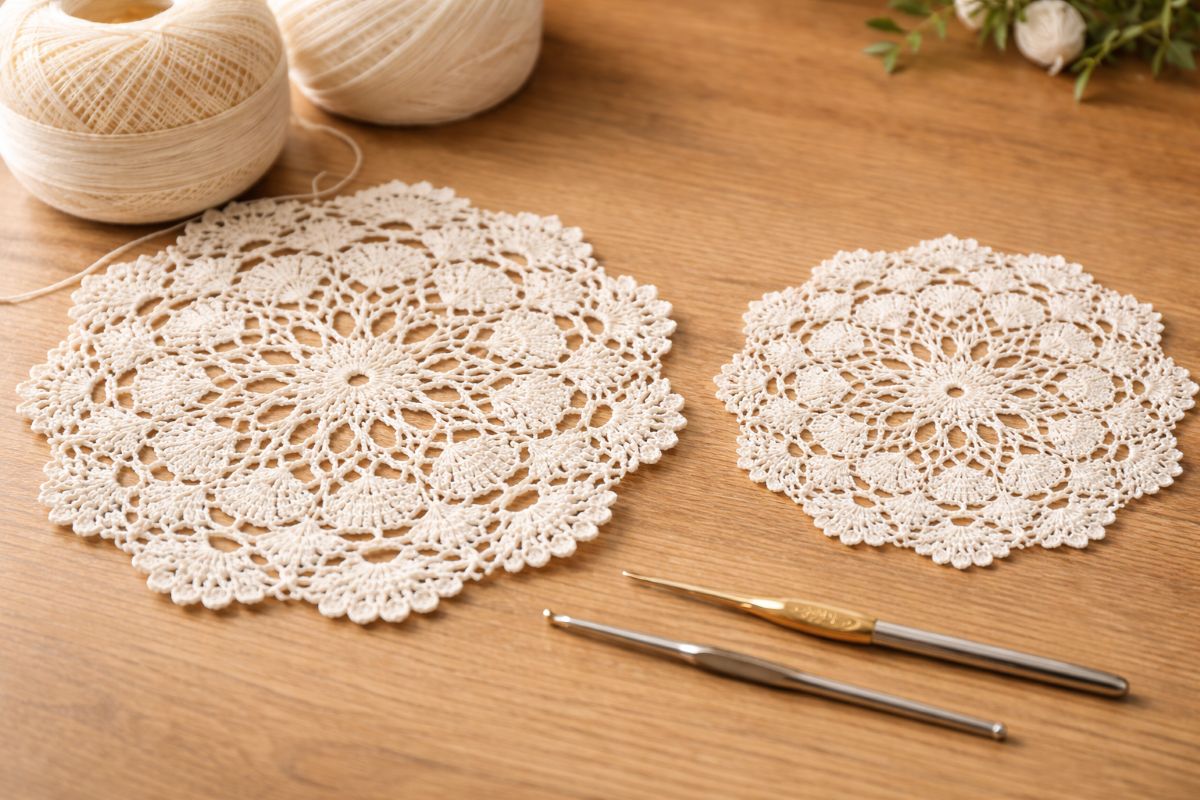
If you substitute size 5 thread for size 10, the finished piece will become larger and slightly heavier. If you substitute size 20 for size 10, the finished piece becomes smaller and more delicate.
This principle is similar to how yarn weight affects gauge. The Craft Yarn Council explains how yarn thickness impacts finished size in knitting and crochet here:
👉 https://www.craftyarncouncil.com/standards/yarn-weight-system
Although crochet thread size substitution works within a different numbering system, the scale principle is the same.
Substituting Thicker Thread for Finer Thread
One of the most common crochet thread size substitution scenarios is using thicker thread because it feels easier to handle.
If a pattern calls for size 10 and you use size 5 instead, several things happen.
The finished piece grows in diameter. A doily that was meant to measure 12 inches might now measure 15 or more. The lace looks more pronounced. The piece feels sturdier.
This type of crochet thread size substitution can work well for decorative pieces like table runners or placemats. In fact, if you’re exploring crochet doily patterns and want a bolder look, thicker thread can add presence without altering the stitch structure:
👉 https://lynscraftsyarns.com/crochet-doily-patterns-guide/
The main consideration is space. If the pattern was designed to fit a specific surface, scaling up may not suit your purpose.
Substituting Finer Thread for Thicker Thread
The opposite form of crochet thread size substitution happens when someone wants a more refined result.
If a pattern calls for size 10 and you use size 20 instead, the piece shrinks in scale. The stitches appear tighter and more intricate. The finished lace may feel almost weightless.
This approach works especially well for heirloom-style lace or delicate edging.
However, using finer thread also increases the time required. Smaller thread means more stitches per inch, tighter tension, and slower progress. It also demands smaller hooks.
If you’re unsure how to choose crochet thread size before substituting, reviewing how to choose crochet thread size for your project can help clarify whether scaling down makes sense:
👉 https://lynscraftsyarns.com/choose-crochet-thread-size/
How Crochet Thread Size Substitution Affects Drape
Scale isn’t the only factor in crochet thread size substitution. Drape changes as well.
Thicker thread creates a more structured fabric. Finer thread creates softer drape.
If you are substituting thread for a garment pattern, drape matters significantly. A shawl made with size 3 thread will hang differently than the same pattern worked in size 10.
When considering crochet thread size substitution for wearables, imagine the movement of the finished piece. If the pattern depends on fluid drape, substituting a thicker thread may create stiffness.
Tension and Hook Adjustments
Whenever you experiment with crochet thread size substitution, hook size must also be considered.
Using thicker thread with the same hook will tighten the fabric. Using finer thread with the same hook may loosen it.
Generally, when you substitute thread size, you should adjust hook size proportionally. Thicker thread usually pairs with a slightly larger steel hook. Finer thread requires smaller hooks.
If you’re browsing steel hook options or thread choices, you can compare materials in the crochet thread collection here:
👉 https://lynscraftsyarns.com/product-category/crochet-thread/
The relationship between hook size and thread thickness determines how evenly the stitches form.
When Crochet Thread Size Substitution Is Safe
Crochet thread size substitution is safest when:
-
The project does not require precise measurements
-
The finished dimensions are flexible
-
You are making decorative lace rather than fitted garments
For example, doilies, table accents, and ornamental pieces allow for experimentation. If the finished diameter changes slightly, it usually does not compromise the function.
However, for fitted garments or items requiring specific dimensions, crochet thread size substitution requires more careful calculation.
Blocking After Substitution
Blocking becomes especially important after crochet thread size substitution.
Changing thread thickness can slightly alter how the lace lays flat. Proper blocking allows the fibers to relax and the pattern to settle into its intended structure.
Textile science explains how fiber tension responds to moisture and drying, which is why blocking works effectively with cotton thread. Cotton fibers, as described in general fiber references like Britannica’s overview of cotton, respond well to shaping during drying:
👉 https://www.britannica.com/topic/cotton-fiber
Blocking can correct minor distortions caused by thread substitution.
Understanding Scale Before You Substitute
The key to successful crochet thread size substitution is understanding scale before you begin.
If a pattern’s original finished size is 10 inches in diameter using size 10 thread, and you substitute size 5, you can expect a noticeable increase in size. The increase will not be random; it follows proportional scaling based on thickness.
While exact conversion charts for thread are less standardized than yarn weights, experience shows that stepping up one common thread size category results in a meaningful but predictable size change.
The more you experiment with crochet thread size substitution, the more intuitive these adjustments become.
Final Thoughts
Crochet thread size substitution is not a mistake. It is a tool.
When you understand that thread thickness changes scale, drape, and texture — but not stitch structure — you gain flexibility. You can adapt patterns to your preference, adjust finished dimensions, and experiment confidently.
The key is intentionality. Substitute because you want a different outcome, not because you’re guessing.
Once you understand how crochet thread size substitution works, thread crochet becomes far less rigid and far more creative.

